Showing posts with label books. Show all posts

Wednesday, July 18, 2012

I'm So Glad We Had This Time Together

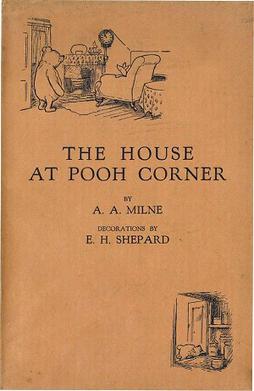
My typist firmly believes that the saddest moment in all of literature, the passage she cannot ever read without instantly tearing up, is the ending of A. A. Milne's The House At Pooh Corner.

Christopher Robin is about to start school. Knowing that his childhood life of play is coming to an end, he takes his beloved bear to an enchanted place in the forest and asks him to promise never to forget him and the delights of the time they have spent together. Pooh promises to remember, even if Christopher Robin lives to be a hundred and he lives to be ninety-nine. The vow made, the serious mood lifts and the two run off to nowhere in particular for a final romp. And then, the finest book in children's literature concludes with the following words:
So they went off together. But wherever they go, and whatever happens to them on the way, in that enchanted place on the top of the Forest, a little boy and his Bear will always be playing.
My poor typist. She hates working with tears running down her cheeks.

Are you with me, darlings? Close readers that you are, have you figured out what I am trying to say?

It's time, my pretties. After six and a half years and 761 posts, it's time to bring the active phase of this happy experiment in social media to an end. To put it simply, I've been dead for nearly three years. I think it's high time I retired, don't you?

Thank you.
Thanks to every single one of you for being a part of this quirky, (un)real place, which the middle-aged broad who brought it into being has always thought of as at least a little bit enchanted -- because of you. Thank you for reading, for caring, for keeping the spirit of play alive in your own selves and in the world. That spirit will never die, because the world and all its critters need it, desperately. If you live to be a hundred, don't ever lose sight of that truth.

As of now, the blogging here will end, but the blog will go on in the sense of being here, always, for you, like some loyal companion animal of Very Little Brain whose love you need and whose insights might suggest that brains are overrated. As of now, Roxie's World is an archive of what we have thought and felt and how we have endured the past six and a half years. Come back from time to time. No one but me will know you've been here, and I will love knowing you stopped by.

Now, put down your hankies, kids, and listen up. I've got some good news, too. Are you ready?

Moose has launched a brand new blog. It's up. It's going. You are invited to head over there. As soon as you finish reading this.

A brand new blog? Yep! I thought she should call it Moose, Unleashed, but for some baffling reason she has opted to call it The Madwoman with a Laptop instead. (Could the name have something to do with the little essay she contributed to this collection? Who knows?) What's the new blog going to be and do? Well, one never quite knows with blogs, but the inaugural post makes it sound as if fans of this here blog will feel right at home with the Madwoman, who promises to offer "commentary on a similar, eclectic mix of subjects from a familiar perspective: queer, feminist, critter-affirming, with a tone that moves between and among irreverence, optimism, and righteous indignation, with occasional unapologetic lapses into sentimentality. I’ll write about higher education, middle age, new media, politics, queer stuff, books I read or teach, the stuff I watch on TV. I will rail about Excellence Without Money (which is still ™RW Enterprises LLC) and wax rhapsodic on college women’s basketball. I’ll offer glimpses of life with my new companion terrier, Ruby, and my companion human of 28+ years, the woman known on Roxie’s World as Goose. There’ll be jokes, recipes, pictures I take. Maybe even pictures I draw."

Pictures I draw? See caricature above. Which proves that there may well be some Madness in the Woman who has launched this new venture. Girl, put the stylus down and step away from the iPad before someone gets hurt!

Anyhoo, kids, speaking of the woman known in these precincts as Goose, we realize there may be some identity challenges ahead for some of this blog's readers as we negotiate the transition to The Madwoman with a Laptop. You'll be pleased to know that the Office of Persona Management will remain open should you need assistance in figuring out who to be. Mark Twain is standing by, Candy Man, and is ready to hand out advice on all matters comical and ontological. Some things never change, I swear.

But some things do change, my darlings, and that isn't necessarily bad. Our ability to adapt to change is a measure of our strength and resilience. Roxie's World has always been a celebration of resilience, hasn't it? Of picking up and carrying on, in every sense of the term.

So, carry on:
  • Subscribers: Add The Madwoman to your feed readers. Now. Moose's fragile self-esteem won't survive a crash in readership.
  • Blog pals: Put The Madwoman in your blog rolls. Immediately. Please? Looking at you, cowgirl, and you, Crazy. And I know you're on vacay, TR, but hop to, will ya?
  • Everybody: Show some love. Leave a comment here and there to let us know we're still a pack and always will be. Pretty please with kibble on top?
My typist has gone through half a box of Kleenex working on this post and still is reluctant to bring it to a close. As I said before, though, it's time. I know in my large and long still heart that it is time. Even my typist is ready, but she's too choked up to speak right now, so we'll let comic genius Carol Burnett have the last word. Seems we just get started and before you know it, comes the time we have to say -- 

Oh, you know the rest. Peace out, my pretties. Thanks for running with us.

Tuesday, April 03, 2012

Remembering Adrienne Rich

As you have no doubt heard by now, another shero has left the building. The poet Adrienne Rich, whom Moose has lovingly described as the fairy godmother of lesbian feminism, died last Tuesday at her home in Santa Cruz, California. Tuesday, you may recall, was Moose's birthday, which adds an extra bit of poignance to the loss here in Roxie's World. Rich was only 82 years old. Only -- Yes, children, 82 sounds kinda young to the ornery 50-somethings who hang out here. Someday, you'll feel the same way. Swear to dog.

What can we say about Rich that others haven't already said in the outpouring of praise and sorrow that quickly followed news of her death? Simply that her poetry was and is, like certain pieces of music, part of the soundtrack of our lives. It is lodged deep in our heads and hearts. Lines come to us unbidden, in sleep, in crisis, in moments of intimacy. Whatever happens with us, your body will haunt mine. . . .I came to explore the wreck. / The words are purposes. / The words are maps. / I came to see the damage that was done / and the treasures that prevail. . . .With whom do you believe your lot is cast?


The collage above features the autographed title page of Moose's well-worn copy of the book dykes of a certain age all had on their shelves in the 70s and 80s alongside their well-worn copies of Our Bodies, Ourselves and The Moosewood Cookbook. You couldn't get dates back in those days if you couldn't quote most of the "Twenty-One Love Poems" from memory. While changing the oil of your girlfriend's car. Or holding a mirror up to your vajayjay in a circle of your closest friends. (Closest friends: That's lesbian-speak for ex with whom I am still complexly entangled or chick I am hoping to sleep with next.) Just kidding, kinda.

Moose isn't quite sure when she got Rich's autograph on the sacred text. She thinks it must have been at a reading at Womanbooks in New York (which is discussed in this totes excellent Signs article by Kristen Hogan on women's studies and feminist bookstores), when Rich was promoting her next book, A Wild Patience Has Taken Me This Far. Yeah: Fall 1981. Moose was the scraggly grad student standing in line clutching the poet's previous book, which she had gotten as a gift from one of her closest friends. She eventually got around to purchasing A Wild Patience and writing a paper comparing it to Dream, because she took a course called Theories of Female Creativity and you could get by with that sort of thing as long as you threw in a dollop or two of French theory to make it all look legit.

Did you really expect this post to be about Rich? Here, let's try again.

We needed a fairy godmother, someone whose words had the power of incantation and a wisdom that seemed ancient. We needed that to counter all the voices in and out of our heads shouting "No!" to our every desire, our dreams, our ambitions, our longings for another kind of world. Rich was important because she gave voice to those dreams, even as she demanded that her readers attend to the world 
as it is     not as we wish it
as it is     not as we work for it
to be 
("The Spirit of Place")
For all the dreamy feminist utopianism of her lush lyricism, Rich always had a foot firmly on the ground of the world "as it is." Yes, she gave us permission to revel in the joys of erotic pleasure and outlaw love, but she also reminded us that the world was always with us and those private pleasures couldn't command all our energy and attention. In the nineteenth of the twenty-one love poems, the speaker reminds her beloved, "I told you from the first I wanted daily life, / this island of Manhattan was island enough for me." The remark is in parentheses, a graphic emblem of the tensions between separateness and connection that are the subject of the final poems in the sequence.

You hear in that "I told you from the first" something of the moral rectitude that could make Rich both annoying and bracing. She was capable of a prescriptivism that could be damaging to both politics and poetry -- and wrote about that risk in poems like "North American Time":
When my dreams showed signs
of becoming
politically correct
no unruly images
escaping beyond borders
when walking in the street I found my
themes cut out for me
knew what I would not report
for fear of enemies' usage
then I began to wonder
What felt like righteousness, though, was also a consciousness of privilege and of the duties Rich obviously felt as a white, North American, middle-class woman to make use of the power she had to try to effect change. You could say she exaggerated the amount of control women had over their lives, as she seems to do in a line like, "Only she who says / she did not choose, is the loser in the end" (XV, "Twenty-One Love Poems") -- Or you could say she recognized that no amount of oppression ever let one off the hook. We are all to some degree responsible for our lives and accountable to our moment in history -- "the life of your tribe / the breath of your planet," as she puts it in "North American Time."

Adrienne Rich gave voice to our dreams, and she demanded that we work to make those dreams real. Rich has moved on, too soon, alas, but the work, of course, continues. We realize now it isn't just women's work, as we might have supposed in earlier, separatist moments. It's all our work, and we'd better get to it. Because somewhere, we might imagine, Rich and her friend and sister/warrior Audre Lorde are impatiently waiting for us "to perform the needed acts" ("Toward the Solstice"). Let's get started, shall we?

* * *

Monday, March 12, 2012

Now We Are Six

Moose had that book over there on the left when she was a kid struggling to understand why she had not been born in Paris, France, as the lord had clearly intended her to be. She didn't love Milne's collection of children's verses in the way she loved his more well known works of prose, but there was almost nothing she loved as much as she loved the stories of Christopher Robin and his beloved Bear of Very Little Brain. As read aloud to her every night by an adored father whose silky smooth voice was ideal for storybook reading.

We'll pause here while my typist recalls the sound of that long silenced voice, which made her delight in words like Heffalump and Expotition and helped her to believe in an enchanted place on the top of the Forest where love and play would last forever. Ah, yes.

Now we are six -- and by "we" I mean this blog and its readers, this quirky little possibly enchanted world that we have built together word by word, link by link, post by post when we should have been doing other far less pleasurable things. Thank you for being here and for making us feel that, whatever it is we are doing here, it's fun enough to go right on doing it, if not forever, at least for the next little while. We are sure of you, as Piglet was sure of Pooh, and that, by golly, is good enough for us. Happy blogiversary, darlings. See you again soon.

* * *

We'd be remiss if we failed to mention here that Moose and Goose happily celebrated the twenty-eighth anniversary of their unlicensed love on International Women's Day, March 8. The occasion was thoroughly celebrated on Facebook and out in the real world with a decadent feast in a neighborhood joint where everybody knows your name. Thanks for all the good wishes, friends. And if you're feeling bummed that we didn't get up a proper anniversary post called Twenty-Eight Years of Queer Delight, well, go read Twenty-Seven Years of Queer Delight, Twenty-Six Years of Queer Delight, Twenty-Five Years of Queer Delight, and Twenty-Four Years of Queer Delight. That's a heaping helping of queer delight. We're hoping that will hold you till next year! Peace out.

Monday, January 23, 2012

Outlook: Hazy


(Photo Credit: Moose, 1/23/12)

Moose snapped this moody shot on her way off campus this evening. (No, it only looks like she was the last person to leave the joint.) Campus was enveloped in a thick mist all day today, which deepened the quiet of the still largely student-free zone. Spring classes begin on Wednesday. (Yes, that's ridiculously late. You won't hate us so much when we're wrapping up the semester around, you know, the Fourth of July.) There is still a lot to do because Moose has got a lot going on this term and still hasn't finished tweaking her syllabus for the third iteration of her blogging class.

Which means, darlings, that we don't have time to linger here with you right now, much as we'd like to. Forgive us, will you? You know we love you and will return as soon as we can. In the meantime, click on over to Arcade and read Natalia Cecire's thoughtful piece on academic blogging, which kindly  invokes Moose's riff on pseudonymity in The Journal of Women's History roundtable on academic feminist blogging. Or, speaking of Tenured Radical (who edited that JWH roundtable), go read her latest post on her midlife transition to a new job. Show her some love, kids, and, if you see her wandering aimlessly in a hallway near you, show her her classroom, too, will ya? Or, if you still read books but prefer books with colorful pictures, pick up Brooke Gladstone's The Influencing Machine. Moose just read it as part of her work for the Committee to Assure That All Incoming Students Read At Least One Fracking Book in Their First Year of College and enjoyed it immensely. It's smart and witty, but it also brings an impressive historical perspective to bear on questions about media and technology that are far too often discussed in completely presentist (and often alarmist) terms. And did we mention that it has lots and lots of pictures?

Off you go, my pretties. It's a great big interweb. Somebody out there is saying something terribly clever right now. Click away or you'll miss it!

Monday, August 22, 2011

Body Matters: Short Takes

As we ease our way back toward serious blogging, we thought we'd call your attention to a few stories that caught our attention in between ocean swims and fine meals and beach reading of books Moose emphatically decided not to include in the trans lit course she'll be teaching this term.

The Aging, Vegan Ex-Presidential Body: Bill Clinton turned 65 the other day, which prompted a spate of stories on the Big Dawg's impressive efforts to manage his heart disease through diet and exercise. The former president, who has a family history of seriously bad tickers, had a quadruple bypass in 2004 and angioplasty in 2010. Since then, working with Dr. Dean Ornish, he has dropped 20 pounds  and become mostly vegan, though he confesses to CNN's Sanjay Gupta to having a bite -- one bite, he says, with a wag of his famous finger -- of turkey at Thanksgiving. Moose liked this story because she is delighted to claim her favorite living former president as a comrade in Lifestyle Adjustment. She also thinks it's good for the country to have to reckon with seeing the nation's most famous devotee of Big Macs and Krispy Kremes as a poster boy for clean living and healthy eating. Moose imagines she would choose death over veganism, because she isn't sure she could live in a world without eggs, but she was endowed by her creator with a ridiculously healthy heart and so has never had to face that choice. Mostly, though, we like this story because it offers further proof that we just can't stop thinking about Bill Clinton's body. We need to know what he is ingesting, how he is looking -- fabulous! -- and how he is feeling (more energetic than ever!). Clinton's successor in the Oval Office also turned 65 earlier this summer, and the AP story focused on the thousands of virtual birthday greetings he received through a campaign orchestrated by his wife. No one, it seems, wants to think about Shrub's aging body or what's going into it. I know: Quelle surprise. And we sincerely apologize for putting that image into your head so early in the work week.

The Professorial Body: Duke's Cathy Davidson, who is garnering raves for her new book, Now You See It: How the Brain Science of Attention Will Transform the Way We Live, Work, and Learn, did a marvelous blog post a couple of weeks ago on a Pilates class that resonated with some of our musings here about yoga, bodies in middle age, and minds/bodies in techno-culture. The post advocates balance, breathing, and compulsory dance movement in schools and workplaces as a necessary counter to the seated life of the mental worker staring at the screen. It offers compelling observations about kids' relationships to their bodies and movement in an age in which bike helmets and pain avoidance constrain them in both body and soul. It even offers a couple of simple exercises to foster alignment and deep breathing. Read the post. Try the exercises. And get Davidson's book, for dog's sake, because everyone else you know is getting it and you don't want to be out of the loop. We've got Now You See It loaded up on Kindles and iPads throughout Roxie's World and can hardly wait to read what this passionate yet practical digital visionary has to say about the world in which we live, think, work, and breathe.

The Lesbian Body: Christina Santiago was 29 years old, a lesbian, a native New Yorker living in Chicago, and manager for the Lesbian Community Care Project at the Howard Brown Health Center. She was killed in a freak accident at the Indiana State Fair on August 13. Four other people died, and Santiago's partner, Alisha Brennon, was also seriously injured when a concert stage collapsed in a strong thunder storm just before the group Sugarland was to begin a show. The story caught our eye in part because the tragedy occurred in Moose's home state but also because of allegations that began circulating on the queer interwebs that the Marion County coroner's office refused to release Santiago's body to Brennon for burial because of the state's DOMA law. First reported by Bil Browning on The Bilerico Project, the charge went viral when Dan Savage wrapped it up in a fiery denunciation of how such laws "serve to torment and persecute gay people at the most trying moments of their lives."

The problem, as it turned out, is that the story wasn't true. The critically injured Brennon had not contacted the coroner's office and appears not to have been treated disrespectfully by anybody. Her partner's body was released to an aunt of Santiago's who was listed as her next of kin. Santiago's funeral and burial were in the Bronx, but those closest to Santiago and Brennon suggest matters were handled amicably and sensitively. Brennon is still hospitalized but seems to be recovering. Bil Browning posted a lengthy apology for his poor judgment and reporting, admitting that his "history of dealing with homophobic behavior by Indiana office holders" likely predisposed him to believe the story without sufficiently verifying it. In his retraction, Savage noted that, "These sorts of things have happened -- surviving gay spouses barred from bedsides, not allowed to retrieve their partner's remains, barred from funerals by hostile family-of-origin members -- but it didn't happen this time."

Savage is right, of course. Such things do happen, and we need to work hard to reduce the likelihood of their happening by securing full legal equality for LGBT relationships. That will require overturning the federal Defense of Marriage Act and every mini-DOMA on the books in states from sea to shining sea. Bil Browning is to be commended for his thorough and thoughtful self-criticism, but we can also learn something from his mistake, from his -- and our -- willingness to believe that a low-level functionary in a coroner's office would see it as his or her job to enforce a state DOMA in such a cruel fashion. (Since Santiago and Brennon were residents of neighboring Illinois, Brennon could presumably have claimed her partner's body under that state's domestic partnership law.)

Again: Such things do happen, but that doesn't mean we can assume they've happened without fully and fairly investigating the claim. Browning didn't try to speak with Brennon because she was still in intensive care and "it seemed crass to call her for a statement." Fair enough, but shouldn't the fact that Brennon was in intensive care have made him doubt that she was in a position to call the coroner's office to try to claim Santiago's body? That it apparently didn't is powerful evidence of how strongly inclined he was to believe what he was hearing without fully corroborating the charge. Yes, Indiana is full of homophobes in high places and lacks the most basic protections for LGBT citizens and relationships, but that doesn't justify jumping to conclusions and circulating falsehoods about particular offices or officeholders. Such mistakes don't serve the cause of advancing LGBT rights, as Browning knows. They also don't honor the memory of Christina Santiago or comfort her grieving partner, family, and friends.

Attention, please: This brief rant has been brought to you by Moose, who feels bad for circulating Savage's post about the Marion County coroner's office on her Facebook page without independently checking out the story. You heard it here first, folks: Not everything you read on the interwebs is true. Be skeptical. Be fair. Be thorough.

RIP Christina Santiago. Your memory will endure, and your vital work will go on. Our condolences to those who loved you and healing thoughts to Alisha Brennon for a full and swift recovery.

Peace out.

Thursday, July 07, 2011

By the Lake

Vacay Photo/Text Essay Brought to You by Willa Cather, Because Even When We Play We Are Hard-Workin' Lit Critters in Roxie's World.

Photo/Text #1: This one goes out to our good buddy and summer reader Historiann, who will score 25 points and an extra large pisco sour if she can identify the source of the following revery upon Lake Michigan:
[le Michigan] is altogether different. It is a sea, and yet it is not salt. It is blue, but quite another blue. Yes, there are clouds and mists and sea-gulls, but -- I don't know, il est toujours pus naif.


Photo/Text #2: Here Cather supplies us with a clever title for a pic of Ms. Ruby and her cousin Scooter out for a long evening stroll beside the lake. We call it, naturellement, Shadows on the Rock:


(Photo Credits: Moose, 7/6/11)

The Moms and la Ruby are on the road for a few more days, headed south later today to gear up for a big eightieth birthday celebration for the Mother of the Moosians this weekend. Back to regular blogalicious programming soon, I promise. For now, we'll leave you with another pithy Cather quote on the particular loveliness of Lake Michigan, which Moose is so deeply delighted to have discovered once again:
[T]he great fact in life, the always possible escape from dullness, was the lake . . . . [I]t was like an open door that nobody could shut. The land and all its dreariness could never close in on you. You had only to look at the lake, and you knew you would soon be free.
We'll let Historiann tell you where that one came from, too, darlings. We've got a boat to catch! Peace out.

Monday, January 03, 2011

2010: Three Great Reads

Read any good books lately? is usually not the kind of question you want to ask an English prof. The answers will probably run a narrow gamut from obtuse ("Hells yeah, man, I just finished Zizek's The Parallax View! Thrilling!) to obscure ("Yes, I was up all night last night finishing Charles Stewart's A Treatise on the Law of Scotland Related to Rights of Fishing. Quite a page turner!).

As it happens, Moose did a fair amount of reading over the course of the year just (and mercifully) ended that was a little more current and a lot more cool than standard English prof fare, so we've decided to focus our out-with-the-old-year-in-with-the-new post on the Three Best Books Moose Read Last Year. Why? Because we are lazy and kinda busy. With the shift of the MLA convention from December to January Moose still has to write up her remarks for her hip and groovy roundtable (session #150) on how blogging and Twitter are going to save rather than destroy higher education. Also, you don't need us to tell you that the great Democratic shellacking was the biggest political news of the year, and you already know that as far as this blog is concerned the great moment in sport for the year was the final minute of the NCAA men's basketball final, as we watched little Butler miss a Hail Mary shot at the buzzer that would have beaten the Evil Empire of Duke. Oh, and you know we weren't wild about The Kids Are All Right, even if it might help Annette Bening snag the Oscar she has deserved for so long.

Anyway and ergo: books.

Tech guru Jaron Lanier's You Are Not a Gadget: A Manifesto is not a perfect book by any means. Its technique of argument by aphorism (e.g., "Spirituality is committing suicide. Consciousness is attempting to will itself out of existence.") can come across as both overwrought and not wholly convincing. Its critique of the culture of mashups and other second-order modes of expression can sound elitist and grouchy, even if we agree that a lot of pop culture feels pretty stale and somnolent right now. Damn those kids and their crappy, boring, loud music! His fears of "cybernetic totalism" and the hive mind don't quite make you want to reach for your tin-foil hat, but they might make you feel slightly sheepish about all the techno-toys that now clutter up your space and time. (Rest assured no anti-tech backlash has taken hold in Roxie's World, kids. Moose got her first Kindle for Christmas and has undertaken a bold new experiment in 21st-century reading in bed. The early results? Her envy of Goose's iPad has already disappeared. Beam me up, Scotty! I'm ready to join the hive!)

The previous paragraph might have you scratching your head wondering what You Are Not a Gadget is doing on our list of Best Books of 2010. Well, in our neck of the woods "best" can mean annoying yet provocative, important, worth thinking about and tussling with, and that's how we ended up feeling about Lanier's book. Moose taught it in her blogging class last semester and liked the kinds of conversations it opened up about our relationships to technology and the culture of Web 2.0. Lanier is excellent at helping non-geeks become more self-conscious about our tools and toys. He does so by pointing out the assumptions about humans and machines that are built into the designs of computer programs and the Web itself.

Lanier writes from within the world he criticizes. He has been around Silicon Valley since the early 1980s and is often described as the father of virtual reality technology. His stance now is that of a contrarian and a disappointed idealist. He's particularly critical of the open source movement and the devaluation of content in the environment built out of the assertion that "information wants to be free." We share some of Lanier's concerns and skepticism, but he is also overly invested in notions of originality and individuality that are probably less threatened by technology than by other broader, deeper transformations in Western culture. Indeed, one might wish that the book had a richer and more nuanced historical sense, but it could be someone else will have to write that particular analysis of the brave, less new than we seem to imagine world in which we now find ourselves. We'll still give You Are Not a Gadget a PAWS UP for asking questions we enjoyed thinking about and helping us to see that there is nothing natural or inevitable about the designs of the tools we now use in every moment of our working, thinking lives.

The other two books on Moose's Best of 2010 list are not manifestos but memoirs, Patti Smith's National Book Award-winning Just Kids and Gail Caldwell's Let's Take the Long Way Home. Both are poignant, beautifully written narratives of friendship and loss that manage to avoid sentimentality and the appalling cliches that tend to pop up in ready-for-Oprah tales of grief.

Just Kids has received a lot of much deserved attention and praise. (Go listen to a captivating 7-minute excerpt of Smith reading from the book here.) We don't have much new to say about her portrait of her relationship with the artist Robert Mapplethorpe, whom she met in the summer of 1967 and to whom she was closely connected -- first as lover and later as muse and friend -- until his death from AIDS in 1989. As a story of two young artists struggling to give shape to their ambitions, it is both inspiring and endearing. Smith subscribes to a mystical model of the artist she found in a copy of Rimbaud's Illuminations she tells us she pocketed in Philadelphia at the age of 16, but the wry tone and laconic style of her narrative keep it from sounding ridiculous or self-aggrandizing. She also does an admirable job of staking her claim to Mapplethorpe, whose controversial homoerotic photographs would make him a queer hero in the culture wars of the 1980s and 90s, without seeming to try to claim him for heterosexuality. The book is perhaps most fascinating as an eyewitness account of a particular moment in the complex cultural history of New York City, the pre-AIDS period of the late 1960s and 70s when queers and punks rubbed shoulders in places like the Chelsea Hotel, Max's Kansas City, and the Factory and built a counterculture that was subsequently blown away by death, gentrification, and the panic surrounding HIV-AIDS. Smith writes tenderly but not nostalgically of that time, as when she recalls an early exploration of St. Mark's Place:
I can't say I fit in, but I felt safe. No one noticed me. I could move freely. There was a roving community of young people, sleeping in the parks, in makeshift tents, the new immigrants invading the East Village. I wasn't kin to these people, but because of the free-floating atmosphere, I could roam within it. I had faith. I sensed no danger in the city, and I never encountered any.
The world of Caldwell's Let's Take the Long Way Home is remote from the Boho coolness of Smith's New York, but it, too, is a story of friendship rooted in shared passions and finely meshed sensibilities. Sadly, it, too, is a story of friendship cut short by early death. Caldwell and her friend Caroline Knapp were both writers. Caldwell was a book critic for the Boston Globe when she and Knapp became friends in the mid-1990s. Knapp was a columnist for the alternative Boston Phoenix whose account of her struggle with alcoholism, Drinking: A Love Story, was published in 1996. Caldwell won a Pulitzer Prize for criticism in 2001. Knapp was diagnosed with lung cancer in April 2002 and died from the disease in June at the age of 42.

Caldwell's book feels remarkable because, more than 80 years after Virginia Woolf marveled at the possibility that Chloe might like Olivia in A Room of One's Own, it is still unusual to encounter a story centrally focused on love and loyalty between women. Caldwell and Knapp shared more than the solitary discipline of the writer's life. Caldwell is also an alcoholic who struggled for years to keep working and keep drinking before making the commitment to getting sober. Both were also fiercely committed athletes who loved the water (Caldwelll was a swimmer, Knapp a rower). Both were also dog lovers who forged their friendship over the course of miles and miles of walking with their animal companions on the paths around a Cambridge reservoir. The book unfolds with the quiet serenity of a long, satisfying walk. Caldwell, too, is a laconic narrator who eschews melodrama and avoids self-pity in telling the story of having and losing a beloved friend, of having to figure out "how to live in a world where loss, some of it unbearable, is as common as dust or moonlight."

Exactly so. None of the profound pleasures of Let's Take the Long Way Home will be spoiled by letting you know that the book ends in the deeply affirming gesture of Caldwell bringing a new dog into her life. Read this book. Take a walk in the thin light of a winter afternoon. Remind yourself that unbearable loss eventually resolves into acceptance and finally opens the door to new attachments. That's not a bad thought to have in the beginning of a fresh new year -- and that's why Let's Take the Long Way Home is the best of the best books Moose read in the old year.

Peace out, darlings. Happy new year -- and happy reading.

Wednesday, December 22, 2010

In Lieu of a Post . . .

. . . we offer a poem, my pretties, which is in no way holiday-related except that it expresses Moose's wish that Santa existed so that he could bring her a puppy for Christmas so that she could have a furry companion to go along with the human companion who walks with her on the long, arduous, lovely trail called life. The poem, by the Australian poet Petra White, was brought to our attention by our beloved Candy Man, our personal authority on all things Australian and many things poetic. Thank you, kind sir, for a beautiful poem and so much more.

And thanks to all of you for being such excellent furry and non-furry companions to all of us in Roxie's World. If you are traveling this holiday season, may your journeys be safe and joyous. If you are not, well, lucky you. The moms hit the road bright and early tomorrow morning for a few days in the Land of the Moosians. Details as time and circumstances allow. Meanwhile, the poem (which we found here):

Woman and Dog

A woman and a dog walked all day
beside the non-moving canal.
People who walk dogs displace themselves:

the dog sniffs and leads, harnesses
a human soul, spirit and flesh
willing or not. Its human-dog eyes

cradle the walkable world – a happy place –
a brimming here-and-yet. The canal
neither followed nor lagged behind.

There was the simplified world, on either side, green
fields and red houses. There was the little pub
they always got to.

So long they trudged, two bodies and one
soul, so many miles,
the paws began to bleed.

Little flecks of ruby blood glittered the black
rubbery pads, as if the dog was inking out
all the sadness of the woman.

And the woman, being just strong enough,
gathered up the dog (not a small one)
and carried it all the way home, wherever that was.

© Petra White

Don't you love that line, There was the simplified world? Let's take a long walk in the new year, darlings, and see if we can find it. Peace out.

Wednesday, August 18, 2010

Come Back to the Raft Ag'in, Huck Honey . . .

. . . But Leave the Laptop on Shore, 'K?

(Image Credit:  Mark Twain, The Adventures of Huckleberry Finn [1885], via)

The fantasy of escape from civilization is so deeply rooted in American culture that we might as well say it springs from the nation's soul.  It's a fantasy that appeals to our sense of ourselves as individuals and free agents, sturdy beings unencumbered by history, family, or society.  It's a total crock, of course, but it's a crock that has resulted in some truly fine writing and storytelling -- everything from, you know, this to, say, this.

Anyhoo, the fantasy of escape from civilization is also often a dream of escape from technology, from whatever machines are perceived to be mucking up the paradisal gardens of our collective imaginations at any given moment.  Lately, it would appear, the machine we long to escape is the one you are holding in your hands or lap as you read these words.  Have you noticed?  Suddenly everyone is running away from their computers, declaring themselves unplugged, subjecting themselves to heroic experiments in disconnection.
  • Cartoonist James Sturm brilliantly documented his 4-month "exile" from the Internet in a series of word/image posts that ran in Slate from April to August.  (He cheated once.  It involved dead bunnies and a heartbroken child.  We vote to let him off the hook for his lapse.)
  • Nation editor Katrina vanden Heuvel courageously declared in WaPo that she had put an away message on her e-mail for the month of August to let folks know she would be checking messages infrequently as part of an effort to live more slowly and reflectively.
  • The New York Times asked for volunteers to give up their gadgets for a period of time and report back on the experience.  Their harrowing tales of life without Farmville are documented here.
To us, though, the most fascinating account of these forays off the grid is the one prominently featured in Monday's Times -- the story of five neuroscientists interested in the effects of using digital devices on the brain spending a week together in a remote part of southern Utah away from computers and other communications tools.  They literally went "back to the raft," using themselves as guinea pigs to test whether the effects (on thinking and behavior) of our reliance on such devices might be reversed by a "retreat into nature," as Matt Richtel puts it in his story.


(Photo Credit:  Chang W. Lee, New York Times.  Art Kramer, of the University of Illinois, studies the neurological benefits of exercise.)

Not surprisingly, if you put five really smart guys with overlapping interests but different types of expertise out in the middle of nowhere for a few days, the dudes relax, chug a few brewskies, and shoot the $hit -- though in this case the $hit is like, you know, pretty high falutin'.  Instead of making fart jokes around the campfire, they're speculating about what happens to the brain when humans multitask and what are the best imaging techniques for capturing "the effects of digital overload on the brain."  They are also doing things like forgetting to put on their watches and not reading the research papers they had packed along on the trip.

Further study will have to be done, of course, but it would appear that the guys were on VACATION!  Go read the story, which is really pretty cool for the way it shows the scientists sharing ideas and using their own brief experience in nature to test and in some cases modify their previously held assumptions.

Here's the thing, kids:  Roxie's World is by no means opposed to getting away from it all.  We are totally down with the salubrious effects of close encounters with nature and the importance of making space in one's life for quiet and reflection.  The moms like nothing better than a good long walk, which is why they made such excellent dog people during my embodied years, and Moose has practiced a variety of meditative disciplines, including yoga, t'ai chi, and long-distance running, over the course of her adult life. (For new readers, here's a post that offers a kind of statement of faith from Moose on the value of walking away, temporarily, from one's ordinary life and world.)

During their recent trip to England and Wales, both moms disconnected to some degree:  Both put "out of office" messages on their e-mail, and both spent a lot less time hunched over their computers doing the kinds of things they typically do online.  Moose stayed off Twitter for two whole weeks and discovered she didn't miss it at all.  She kinda kept up with her blog-reading, but didn't post comments on any blogs but this one.  Posting here was light and trip-related, as you know.  She checked Facebook regularly, mostly to post travel photos and stay in touch with folks at home.  She took her iPhone with her, thinking she would use it as a back-up camera, and never took it out of her pack.  Goose's pack was so loaded down with Mac gadgets that Moose referred to her bag as the Apple store, but she made good yet limited use of both laptop and the new iPad.  Moose also did a test-read on the iPad during the trip home and is pleased to report that Charlotte Brontë's Villette mitigates ever so slightly the discomfort of international flight for people who insist on traveling without detaching their legs.

We digress.  What's fascinating in this rash of vacation/exile from technology stories is the persistence of the fantasy that one can and should endeavor to separate oneself from technologies that are perceived as threats to the self.  Our reliance on these tools, according to this logic, weakens our reliance on ourselves.  It is at best a distraction, at worst a dependence, which is why, over and over again, these stories are framed as addiction narratives. "I've tried various strategies to limit my time online," James Sturm laments in his first post about his decision to go without the Internet altogether. "But nothing has worked for long. More and more hours of my life evaporate in front of YouTube. Supposedly addiction isn't a moral failing, but it feels as if it is."  Hi, I'm James, and I'm an Interwebz addict.

Henry David Thoreau is here for you, James -- and for you, Katrina, and all you other techno-junkies trying to come to grips with your pathetic desire to remain a functioning member of the wired world.  Thoreau groused all the way back in 1854 that, "Our inventions are wont to be pretty toys, which distract our attention from serious things.  They are but improved means to an unimproved end . . . .  We are in great haste to construct a magnetic telegraph from Maine to Texas; but Maine and Texas, it may be, have nothing important to communicate." Oh, Henry, if only there'd been Twitters on the outskirts of Concord, MA back in your day. We'd love to hear you rip into that!


Our point is not to dismiss the substance of some of the claims being made about human-computer interaction these days. There is little doubt that massive amounts of time get wasted in a range of more or less trivial pursuits online and that our techno-toys often serve to distract us from the quiet desperation of lives that feel meaningless or beyond our control. (Oil spill got you down? Click here and get a new cow for your fake farm! Don't worry! Be happy!) We are also eager to see what further neurological research will reveal about whether heavy usage of communications devices is actually rewiring our brains and, if it is, whether that rewiring is clearly detrimental to the brain's functioning or simply benign.

Rather, our point is that this kind of ambivalence toward technology has a long, thick history in the United States.  Americans have been frantically searching for spaces in the world and in themselves supposedly untouched by the techno-industrial machineries of modern life for hundreds of years. That yearning is steeped in privileges of race, class, sex, and technological access. (We give Sturm credit for at least acknowledging the irony of documenting his experiment in living offline in an online publication.) You are not a gadget is the title and the central claim of Jaron Lanier's important yet finally romantic manifesto about the threats to "individual intelligence" posed by the "pack mentality" supposedly encouraged by Web 2.0 designs. We have never been human, Moose has always wanted to reply to that claim, channeling the philosophical core of Donna Haraway's argument in When Species Meet. (Romantic or not, Lanier's book is on the syllabus for the blogging course Moose will start teaching in a couple of weeks. She looks forward to grappling with it in a class of digital natives.)


We have never been human -- In other words:  We have always been gadgets, more or less.  Unplug, darlings. Tell your inbox to go f*ck itself. Take a walk or a hike. Get down on your knees and swear with dog as your witness you'll never play Farmville again. Knock yourselves out, but don't for one second imagine that in doing so you separate yourself from techno-culture. We dream of a world above, beyond, or outside this sad, sullied place, but where is it, my pretties? Have you seen it? Come back to the raft -- but rest assured that GPS will guide you home. You may not be human, but you still have to figure out how to survive in this world. You'll be better prepared for that task if you cut the crap and acknowledge that the problem, whatever it is, is not in our gadgets but in ourselves. Mark Twain understood that. Do you? Oh, how I hope you do. Peace out.

Tuesday, July 20, 2010

Links and Drinks

(Photo Credit:  Moose, on her iPhone, with Lolo, [still] her favorite CameraBag trick, 7/15/10)

I know it's early in the day to be drinking, kids (and we certainly don't encourage wine before breakfast), but my typist has a lot to do today and has had this pic of a pleasant sauv blanc with a pretty summery label just sitting in her phone waiting for an excuse to be shared avec vous, so we thought we'd use it to set up a little midsummer reading list to keep you occupied while she works on the paper she'll be giving at the big Emily Dickinson shindig in Oxford in a couple of weeks.  (Don't get confused, darlings.  Moose hasn't gone and turned herself into a poetry geek.  She'll be presenting a piece of her new stuff proving that every woman writer who ever mattered at all would have made one heck of a blogger.  Dickinson fits into that odd paradigm rather nicely, as it happens.  [See also this brief report on what she did at last summer's Willa Cather shindig.])

Oh, if you've wandered in here by way of Shakesville (which kindly included our critique of The Kids Are All Right in yesterday's Blogaround), welcome to Roxie's World!  We are delighted to see you.  We don't do movie reviews every day, but we try to do something fun and socially redeeming on a regular basis, so give us a click when you've got a moment to kill as you wander the Interwebz.

Anyhoo, here's a bunch of stuff we've been collecting on a range of subjects -- queer intimacies! higher ed!  reading! -- likely to be of interest to our marvelously motley crew of readers.  Read, ponder, discuss, and for dog's sake hydrate, my pretties.  We've got another scorcher on tap for the eastern half of the US of A today.
  • First up for your consideration is a piece that follows nicely on our critique of the narrow, conservative terms in which queer families and intimacies are imagined in The Kids Are All Right.  Queer legal eagle Nan Hunter points us toward a new study of gay male relationships that are "long-term, stable, and open."  The study, led by Colleen Hoff and Sean Beougher of San Francisco State University, looked at 566 Bay area couples and found that nearly half had negotiated open relationships that allow for sex with outsiders.  According to the San Francisco Chronicle report on the study, "47 percent reported open relationships. Forty-five percent were monogamous, and the remaining 8 percent disagreed about what they were."  (Note to self:  If you find yourself having dinner with some fellas in that 8 percent group, do not bring up the subject of dating!)
  • Next up are several pieces offering further depressing proof that the plan to destroy public higher education in the United States is right on track!  California continues to lead the way.  You might want to crack open a fruity little sauv blanc (or something stronger) before you read this report, again from the SF Chronicle, about plans to start offering "a bachelor's degree over the Internet comparable in quality to its prestigious campus program."  Ah, yes -- distance learning:  because we don't need no education; we just need degrees!  As always, our blog boyfriend Chris Newfield has been all over this story with a series of posts on what the UC regents have been up to lately, but in this one he cites a study that demolishes the myth that online education saves money.  Also, while you are torturing yourself with the grim outlook for higher ed, go read this update from the Department of Yes, Things Can Always Get Worse -- a Chronicle of Higher Ed report on how deeply screwed university systems in New York and Illinois are by the budget limbos created by legislatures in those states.  It ain't pretty, kids (and that article is behind the sub wall -- sorry).
  • Don't worry, though -- Our neighbors to the north have decided to wreck their higher education system, too!  Here is a piece by comparativist Linda Hutcheon on news this week that the University of Toronto plans to close its Center for Comparative Literature, founded more than forty years ago by Northrop Frye.  It's being billed as a cost-cutting move, of course, but Hutcheon rightly reads it as an attack on interdisciplinarity.
  • For a little pick-me-up (and if you've been following those links you need one about now!), go read this heartwarming story from one of our Virginia pals about Keswick, a 2-year old yellow Labrador retriever who is the new service dog for Robbie Bingler, a staffer at UVA's Institute for Advanced Technology in the Humanities who is paralyzed below the shoulders.  Robbie's previous dog Harpo, who had helped him with daily tasks for seven years and was a beloved presence around IATH, died of cancer in March.  This is a great story about animals, humans, and love in the workplace.
  • Finally, even if you didn't just get a new iPad delivered to your doorstep, as someone in Roxie's World did this week, you'll want to take a look at this thoughtful commentary by Duke's Cathy Davidson on what she does not love about reading on devices like Kindle and the iPad.  Not only did it make Moose feel a little less jealous about not being the person who received the sleek new gadget, it also sparked some important reflections on how print-based assumptions about reading are embedded in our tools for non-print reading.  Davidson finds that limiting and frustrating, and Moose suspects she will too if she can get her hands on the new iPad for an extended test-read.  Check out the piece and let us know what you think.
Ah, that feels better!  Now we can close some of those tabs and get down to work.  Happy reading, my pretties, on the gorgeous little gadget of your choice.  Peace out.

    Friday, June 18, 2010

    Loyalty, Disloyalty, and Non-Reciprocity

    Or, We Regret to Inform You There is No More Blood You Can Squeeze from This Turnip

    Fascinating conversations are taking place on some of our favorite academic blogs in the wake of an Inside Higher Ed story earlier this week on a (female) provost fired by a (male) president in the Cal State system for refusing to withdraw from a search for a provostship at another Cal State school. The president of Cal State Los Angeles, James M. Rosser, told the provost, Desdemona Cardoza, that going forward as a finalist for the position at Cal State Long Beach would be evidence of disloyalty to the school where she had served as a faculty member and administrator for 22 years. Cardoza had hopes of becoming president at Cal State, LA, when Rosser -- president since 1979 -- stepped aside, but she thought a move to Long Beach would give her valuable experience in working under a different president and on a larger campus. True to his word, Rosser fired Cardoza when she refused to withdraw from the search. She subsequently did not get the Long Beach job. After a 6-month leave, she will return to CSULA as a faculty member. Won't that be fun?

    NB: IHE's account of these events comes from Cardoza. Rosser refused to be interviewed about a personnel matter.

    Historiann has done two posts on this sordid tale of female ambition punished. They are here and here. Read them both as well as the long, thoughtful comments by her smarty-pants readers. Dr. Crazy weighed in yesterday with an angry post about being hit up for a donation by her employing institution, which hasn't given her a raise in two years. Among other sources of low morale and indignation, she notes that she now has to pay $300 a year for the privilege of parking on her campus, which is really an occupational necessity, given the absence of nearby off-campus parking and the lack of public transportation. Both Historiann and Dr. Crazy reject the notion that faculty owe loyalty to their institutions, though Historiann is quick to declare strong loyalties to her profession, her colleagues, and her students. Dr. Crazy points out that loyalty has to be a two-way street and that institutions have done little recently to deserve it from their faculty members.

    Dogs keep coming up in these conversations as exemplars of loyalty, so we figured it was time for us to get in on the action. Also, the English profs of Roxie's World are of a slightly older academic generation than Historiann, Dr. Crazy, and many of their commenters, which may give them a somewhat different experience of and relationship to the issue of institutional loyalty. Forgive us while we think out loud for a few minutes to see if we might open up a different angle of attention on the subject.

    I first started musing on this topic in a comment I left yesterday over at Historiann's:
    I wonder if there wasn’t a time, not so very long ago, when loyalty to an academic institution made more sense than it does now. The moms are a little older (both over 50) and feel the tug of loyalty to QTU, but perhaps that’s just because, all in all, the place has been pretty good to them. Or is it that they came of age professionally when traditions of shared governance and a less top-down model of administration really gave them a different sense of relationship to the institution?
    The moms feel incredibly fortunate to be a dual-career academic couple with secure positions in an R1 school in a, to them, highly desirable location. That in itself earns QTU a certain amount of loyalty, though it's important to note that they weren't hired as a couple. Moose -- as the much, much younger partner in the relationship -- was hired six years after Goose and had to go through two national searches to get her position. Still, they've had opportunities to leave over the years and have chosen to stay. Do they stay because they are loyal, lazy, or on the whole satisfied with where they are? That is a hard question to answer. Can they imagine opportunities that would lure the happy turtles out of their shells? Yes.

    More interesting than the cushiness of the moms' particular situation and its tendency to engender loyalty (or lethargy?) is the question of how structural and economic changes over the last few decades have made it far less likely that faculty will feel a strong sense of loyalty to the institutions that employ them. As we have noted before, the moms were trained by some of the original Tenured Radicals, brave souls who passionately believed that the university, however resistant it might be, could be a catalyst for social change. Their mentors invented and institutionalized new disciplines like women's studies and feminist criticism and in many cases set aside their own research agendas to take on administrative roles because they recognized opportunities to reform curricula and transform the academy -- and eventually the world.

    For all their flaws, universities were, by and large, humane places to work, and faculty could feel a strong sense of agency in an enterprise that was often collective and collaborative and within a structure in which power was decentralized. The moms, too, were idealists and institution-builders. Part of their loyalty to QTU developed out of years of happy experience working with others to turn radical dreams into institutional realities. If you had a good idea and were persistent, you could probably find a way to make it happen. Administrators were generally allies, not obstacles, to the realization of those dreams.

    Cary Nelson's new book, No University Is an Island: Saving Academic Freedom, is an essential tool to understanding why that sense of loyalty and shared purpose seems so quaint, if not downright delusional, on most campuses these days. (There are many other books we could recommend on this subject -- for example, this one or this one -- but Nelson speaks directly to the generational differences that we think inform these conversations about loyalty.) We highly recommend the book, especially to academic professionals under, say, 40 who entered universities after the transition to the corporate, neoliberal model was largely complete. For that generation, tenure has been weakened because far fewer people have it, and shared governance seems like the practice of an ancient civilization that grows more remote with every memo ordering compliance on everything from book orders to learning outcomes.

    The book is unabashedly polemical, and one of its goals is clearly to boost the membership rolls of the American Association of University Professors, of which Nelson is currently president. Nonetheless, Nelson offers a compelling case that the "three-legged stool" of academic freedom, shared governance, and tenure hasn't yet collapsed, though it's gotten awfully rickety under the many threats (he enumerates 16 in the book's second chapter) posed by the forces of corporatization on campus. He is clear-eyed about the nature and the scale of the challenge we face, but he remains confident that resistance is possible and that faculty "have the power they need to save higher education's key roles if they choose to exercise it collectively" (77). He has good, practical suggestions about what faculty can do, together, to make their campuses better workplaces and to revitalize the university's mission of "educating students to be critical participants in a democracy" (77).

    Read this book, and then look around on your own campus for opportunities to participate in the sometimes thankless yet crucial work of shared governance. Is your campus senate an effective check on administrative power? If not, could you help make it stronger? Is there a faculty association that serves to communicate and advocate for faculty independently of the senate and the administration? If not, is it time to look into establishing one?

    It's true that under the corporate model the interests of faculty and administration are often at odds, even if the relationship doesn't feel fully or even especially adversarial. One solution to such asymmetries and the many examples of non-reciprocity evident in the top-down world we now inhabit is to declare oneself, as GayProf does in a comment at Historiann's, an independent contractor seeking to "extract every ounce possible" from the university/employer and willing to move on if the compensation for services ceases to be adequate. Without denying that faculty should be free to pursue new opportunities -- and they should be able to do so without, like Desdemona Cardoza, being punished for "disloyalty" -- we think it's also worth considering Cary Nelson's group-based solution to the challenges we face. Especially as hiring slows to a trickle and competition for what few opportunities there are grows fiercer, we need to commit -- or recommit -- ourselves to activism and collectivism because the alternative is acquiescence to conditions we should refuse to tolerate.

    Don't think of it as loyalty if that strikes you as naive or anachronistic. Think of it as a way to keep yourself from going quietly insane. You're not being true to your school. You are declaring yourself a soldier in the war on corporate power. You're not being a team player. You are being a subversive super hero, in the company of hundreds of other rebels.

    Solidarity, comrades. It's our last, best hope. Yes, dogs are loyal, but they are also pack animals. PAWS UP to working together to improve the lot of everybody in the pack. Peace out.
    Thursday, May 20, 2010

    Complete and Great

    Sorrow has come to Roxie's World again, my darlings. We are sorry to tell you that the Mother of the Goosians, a fine and feisty Texas sweetheart by the name of Hattie Mozelle Owens Smith, died yesterday morning in Austin. She was a beloved mother, grandmother, and great-grandmother, and, as Moose put it in an e-mail to friends, the world's greatest mother-out-law, which is how she came to think of this devout Church of Christ member with whom she built a warm and close relationship over the course of a quarter century. (You can access an obituary here.)

    Mozelle, as she was known (Mo for short, Mammo to her grandkids), combined her faith with a strong commitment to social justice. She was an LBJ Democrat (indeed, darn near the last one, we fear) who hated war, gave generously to those in need, and thought the Bushes were disastrous for Texas, the nation, and the world. She braved the bizarreness of her state's caucus system to cast a vote for Hillary Clinton in the 2008 primary campaign and marveled at the possibility that the country might have its first woman president. (She was born in 1919, the year before women got the right to vote. Oh, and she ended up being pretty darn happy the nation elected its first African-American president, by the way.) She lived her faith and saw good in everyone, even heathen lesbians who cussed too much and didn't visit Texas nearly often enough in her opinion.

    Mozelle was 90 years old and in reasonably good health until recently, despite having lost her sight to macular degeneration in the last ten years. Her blindness was an inconvenience, but it never impeded her lively curiosity. She was a voracious reader of talking books and made her way through most of the novels of Willa Cather not long after Moose published her study of the Nebraska writer. When she finished Cather's most famous book, My Ántonia, she phoned Moose up and said, "Now, Moose, I've got a stupid question." Moose laughed and said, "Mozelle, there are no stupid questions." "Well, good, then tell me: What is the deal with this male narrator? Why on earth would she tell the story that way?" (Yes, Texas women speak in italics. They have very expressive voices.) Moose threw her head back and laughed again. "Heck, Mo, that is not only not a stupid question -- That's the question literary critics have been trying to answer for more than seventy-five years!" (Apparently non-Texas women lapse into italics when speaking to Texas women. It's contagious.) They spent twenty minutes discussing the joys and the puzzles of this beautiful yet baffling book. Mozelle was a good reader because she had a great capacity for empathy and a razor-sharp b.s. detector. Those were qualities she had in common with Willa Cather and, perhaps, her daughter-out-law.

    We will say more on the subject of this late, great woman when we can, but the moms are off to Texas bright and early tomorrow morning to celebrate Mo's life and legacy, so for now we will let Cather have the last few words. They come from that book Moose and Mo had so much fun discussing all those years ago and include the words Cather chose for her own gravestone. The male narrator, Jim Burden, is recalling a moment alone in his grandmother's garden on his first day on the great Nebraska prairie, where he has just arrived as a young orphan from Virginia. Despite the newness of his surroundings, Jim experiences a sense of calm contentment as he lies on the warm earth beneath the immense prairie sky. He eloquently describes his experience of the moment (and the words on Cather's gravestone are in italics):
    I kept as still as I could. Nothing happened. I did not expect anything to happen. I was something that lay under the sun and felt it, like the pumpkins, and I did not want to be anything more. I was entirely happy. Perhaps we feel like that when we die and become a part of something entire, whether it is sun and air, or goodness and knowledge. At any rate, that is happiness; to be dissolved into something complete and great. When it comes to one, it comes as naturally as sleep.
    Sleep well, sweet Mo. The happiness you gave in such abundance lives on in every heart you touched.

    * * *
    With love and thanks to friends and family in many places for kind words, gestures, and deeds. You lift us up, again and always.

    Monday, May 03, 2010

    Days of Our Leaves

    Or, Things We Learned Out of School


    Click on that sound file, darlings, or my typist will feel that her long hours of trolling the Interwebs looking for snort-inducing tidbits for you are in vain.

    First Things First: Our sincere apologies to Tenured Radical, who offered a wonderful post yesterday called “Like Sands Through The Hourglass, So Are The Days of Our Lives: Having the Courage Not to Go to Graduate School.” It’s chockfull of TR’s characteristically shrewd analysis and advice, though we would probably still tell the best and brightest to give grad school a shot, as long as they have their eyes wide open about the prospects for a tenure-track job at the end of the dissertation rainbow. I mean, heck, it’s not like the quote, unquote real world is chomping at the bit to hire English and history majors right now either.

    Anyway, go read TR if you need to get your knickers in a wad over your future as an exceedingly well-read barista. We just riffed on her title because we are strict adherents to Rule #1 of the Blogosphere: Why go to the trouble to make something up when you can steal something from someone else? Also, TR's evocation of sand moving inexorably through the hourglass of spring made my typist realize that the clock on her academic-year leave is now truly, officially, sadly winding down. Yes, she will still have the summer free from teaching and most bureaucratic responsibilities to make progress on the long list of things she would assuredly accomplish over the course of this year. It was a totally realistic list that looked something like this:

    Moose’s Sabbatical To-Do List

    1. Lose 40 pounds.

    2. Finish the Most Overdue Project in the History of American Publishing.

    3. Organize study.

    4. Get a handle on the difference between Digital Humanities and New Media Studies and decide which it is I now do.

    5. Organize pantry.

    6. Draft an outline and a couple of chapters on the Amazing Book on Blogging That Is Going to Transform the Humanities and Save the World.

    7. Read Proust.

    8. Organize shed.

    9. Reduce carbon footprint.

    10. Propose an MLA session.

    She made progress on, um, a number of those goals and managed to check off a few other items that weren’t on her original list, as you can see:

    Moose’s Sabbatical Got-Done List

    1. Embrace fat acceptance, because, srsly, I am 50 + 1 years old, female, and I enjoy eating and drinking too much to subsist on salads and water for the rest of my life.

    2. Survive three blizzards and ice dams without going insane.

    3. Embrace disorganization, because it’s perfectly obvious that organization is a bourgeois plot to keep people from ever getting any real work done.

    4. Get published in Inside Higher Ed, because academic punditry is really where it’s at.

    5. Learn to be a dog person who doesn’t, for the time being, have a dog.

    6. Read Clay Shirky, Donna Haraway, Marilynne. Robinson, Cary Nelson, Jaron Lanier, Patti Smith.

    7. Fall, break wrist, and sit through meeting with dean with only brief pause for near-tears and confession of injury.

    8. Imagine heaven, with dogs, and figure out how to write from there.

    9. Stop having hot flashes. I think. For now.

    10. When in doubt, take a walk.

    So, what did Moose learn during her year, mostly, out of school? This is an important question, not just because there is pressure on academics to account for what they do with their quote, unquote time off these days, but because we’d like to help our pals who have upcoming leaves of their own – real-world buddies like June Star, blogospheric ones like Dr. Crazy – to make the most of their well-deserved respites from teaching. I asked my typist to come up with one last list, which we happily pass along -- and which we invite you to add to in comments:

    Moose’s Mostly Serious Tips for Making the Most of the Days of Your Leave

    1. If you only have a semester off and you have a choice, take the fall rather than the spring term. You can use the summer to settle into sabbatical time and feel truly away when fall classes begin. It will be easier to stay away from campus when that feeling has taken hold. In the spring, as the year winds down, certain tasks and responsibilities – reports, defenses, planning for next year – are going to demand your attention regardless of how disciplined you are about saying no in order to protect your time. I've gotten pretty good at that, and I still barely felt that I was on leave in April.

    2. Get the hell out of Dodge. Even if your research doesn’t require you to travel to remote archives in exotic locations, try to spend some time away from home during your time off. Neither Goose nor I had ever done that before, but the seven weeks I spent in my undisclosed location in the fall were enormously beneficial. I rested. I detached. I did a kind of deep, concentrated reading and thinking that I probably hadn't done since I was reading for my qualifying exams. Could I have done all that if I had just hunkered down at home and resolutely ignored the distractions of my (wonderful) everyday life? Perhaps, but there is something to be said for breathing a different air and seeing a different sky. Try it if you can.

    3. Allow yourself some – or many – moments of Zen. Ignore the to-do list and the pressure to produce, at least some of the time. Remember that non-doing is as necessary to your creativity and learning as doing is. Sabbaticals are all about getting off the treadmills of the usual routines. Give yourself permission to float or fly or nap or dream. My inspiration for this kind of creative (in)activity is, natch, Thea Kronborg, the protagonist of Willa Cather's 1915 novel, The Song of the Lark. In the middle of that big, busy book, Cather sends her fiercely driven aspiring opera singer to a remote part of northern Arizona, where she spends a great deal of time seeming to do nothing. In fact, the heroine is letting go of the mundane pressures of the ego and connecting with the unconscious knowledge she will need in order to become a truly great artist. Yeah, it all sounds kind of woo-woo and weird, but Thea ends up on stage at the Met. You could do worse than to emulate her process of discovery. Even a history geek or a humble lit critter can dream of being a diva, after all.

    4. If you don’t have a blog, now is not the time to start one. If you do have a blog, set limits on the time you devote to it. Blogging is one of those activities that will expand to fill the amount of time available for it. Goose assures me that the time I spend typing for Roxie's World is time spent on fieldwork for the Amazing Book on Blogging That Is Going to Transform the Humanities and Save the World. In a sense she's right, but I've still tried to restrain myself some this year. I've been content to put up fewer or shorter posts in order to give greater priority to other kinds of work. We can't all be Historiann, who consistently manages to feed the horses, take a run, and get up a devastatingly smart blog post before most of us have sucked down our first cup of coffee. (Love you, girlfriend. Mean it!) Know your limits, and try to stay within them. Your audience won't desert you, because they love you, too, darling, I swear they do! Shut down that hit counter, and open that book! The blogosphere will be here when you get back.

    The grains of sand are moving through the hourglass, my pretties, so we've got to go. Make sure to pass along your own brilliant advice for making good use of time off. What's worked for you? What hasn't? Do you recommend getting away, or do you have Goose's knack for closing the valves of your attention like stone and getting work done, no matter where you are? Wow -- And just to prove this topic is what's buzzing around in the hive mind today, we just this moment stumbled upon a brand new ProfHacker post by Kathleen Fitzpatrick called "How to Get More Than You Think Out of a Semester's Leave."

    Goodness, we do have our paws on the pulse of the zeitgeist, don't we? Peace out, darlings, and take time to smell the roses. You will never regret it.