(Image Credit: Brian Taylor, via.)
Read this column, published recently in The Chronicle, by the pseudonymous Madeleine Li, who writes of being denied tenure in the same year that her father died -- and then being chosen to deliver the fall commencement address because she had won one of her university's top awards for teaching excellence.
Read it and then come back here and tell us if you agree that a) it's a fine piece of writing and b) its fineness has everything to do with the writer's remarkable lack of self-pity combined with a well-tuned sense of irony.
Li isn't whining about the injustice of her case or the devaluation of teaching relative to research. She gets that her scholarly output was thin for one on the tenure track and that she took a gamble in choosing to try to publish her research as a book rather than chopping up her manuscript and publishing several separate articles. The point of the piece -- and, in our judgment, the source of its considerable power -- is to tell the not often told story of going back to campus and carrying on with work while coping with the figurative death of tenure denial, a loss compounded in Li's case by the actual death of a parent. She writes -- without rancor -- of gobsmackingly insensitive colleagues who compliment her on her weight loss without seeming to consider that she has been too stressed and grief-stricken to eat. She writes of sitting next to the provost on the dais at commencement, knowing that her tenure file was probably in his office by then. She writes -- Oh, hell, kids, we told you to go read it. Do that, come back, and discuss. My typist has been summoned to help fix dinner, on account of both moms will climb back in the teaching saddle tomorrow and have a lot of work to do this evening. Peace out, my more better and always excellenter friends.
Politics. Pop Culture. Basketball. Dog Stuff. Queer Stuff. Higher Ed. New Media. Pretty Pictures. Puns. Books. Righteous Anger. Cock-Eyed Optimism. Persistent Irreverence. From a Queer, Feminist, Critter-Affirming Perspective. Why? Because Dog Is Love, and Tenure Means Never Having to Say You’re Sorry.
Showing posts with label teaching. Show all posts
Monday, January 24, 2011
Tuesday, September 07, 2010
Reentry: A Conversation
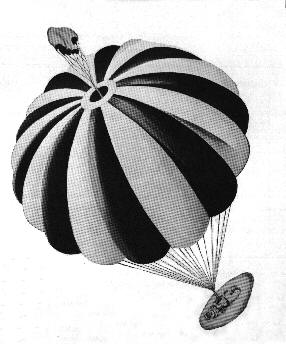
Apologies for the prolonged blog silence, kids. As you know, my typist returned to the classroom last week after a year's leave from teaching and administration, thus completing the transition from Moose on the Loose to Moose Back on a Very Short Leash. After a week of typing syllabi and welcome-back messages and e-mails aimed at charming colleagues into doing this, that, or the other thing, Moose finally agreed to sit down with, um, the Spirit of Roxie's World (SRW) for a Labor Day chat about how her reentry was going. We'll illustrate the conversation with a series of hilarious images (all picked up here) of an emergency reentry vehicle designed by General Electric in the early 1960s to bring an astronaut down from earth orbit to the planet's surface. The vehicle, which, alas, was never actually built, was conveniently known as MOOSE, Manned Orbital Operations Safety Equipment. Which means, of course, that its appearance on this humble blog was inevitable.
SRW: So, Moose, busy week. How's the reentry going?
Moose: So far, so bueno, but I'm here to tell you that life off leave is nothing like life on leave!
SRW: Fascinating, Moose. Could you elaborate for our readers?
Moose: Well, for one thing it involves a lot more talking -- to other people! -- and listening, lots and lots of listening. Oh, and clothing. Every single day. Clothing that fits and looks presentable and everything. It's going to take a while to get used to having to get dressed before 3 or 4 o'clock in the afternoon.
SRW: Now, Moose, aren't you exaggerating slightly?
Moose: Maybe a little, but, hey, I don't have a dog to walk anymore. That always got me out and about, gave me a sense of order and purpose, you know. I read a couple of stories this week about the trapped Chilean miners, about how important psychologists say it is for them to maintain a routine in order to keep from going all Lord of the Flies. I think it's possible I fell down a little in that department in the last few months of my leave, without, I hasten to say, killing anyone or even stealing their glasses.
SRW: Ah ha! Are you saying that it's good to be back on campus and to have more structure to your time again?
Moose: I'm saying it isn't all bad by any stretch of the imagination. I have a great appreciation for the value of time spent off and away from the clock. Even though it's important to get stuff done in order to justify one's time "off" -- to have something to show for it, as we say -- one of the best things about leaves and sabbaticals is that they open up space for moments of non-doing, which, as I have said before, are as necessary to one's creativity and learning as doing is. I firmly believe that daydreaming and other mental activities that don't appear to be productive can free up our minds in ways that will eventually help to advance our projects. Sometimes looking away is the best way to see something more clearly. (I note with interest, for example, a recent Chronicle of Higher Ed piece on academics who find that running increases mental acuity and helps with professional problem-solving.)
On the other hand, after spending a year mostly in a quiet, fairly unstructured time/space, I have to admit it feels good to step out into the daylight, as it were, and into a different energy. (Yes, I am thinking about those miners again, empathizing with their confinement to a dark, underground world, imagining their eventual [we hope!] return to life above ground.) There were moments last week when I really did feel that I was mentally blinking as I tried to adjust to a brighter, louder, more fast-paced world, but I also enjoyed it. Right away I felt my own pace quicken a bit and my reactions get a little sharper. I didn't miss a beat, for example, when my dean asked me at a meeting early in the week to take on a significant new service obligation. I agreed to do it -- in exchange for funding for a small but important initiative in my office. I think I even had the audacity to use the phrase quid pro quo as I was making my demand. Oh, yeah, I thought as I left the meeting, Moose is back on the leash -- and back in the game!
SRW: You're also back in the classroom. How does that feel?
Moose: Great, of course. Teaching really is like riding a bicycle. You don't forget how to do it and it can be a whole lot of fun. In this case, I have the added thrill of feeling like I am riding a shiny new bike, since the course I am teaching is brand new and the method of teaching it -- a writing workshop, really -- is so different from what I do in the lit or theory courses I usually teach. Plus, the course doesn't fulfill a single requirement for any degree program on campus, which means the students are taking it not because they have to but because they want to! That is like an academic hot fudge sundae with an extra dollop of awesome sauce on top!
SRW: So, how's it going?
[Silence.]
SRW: Moose? I asked how the blogging class is going.
Moose: Oh, fine. I just don't know how to talk about it yet, at least not here. I know people want me to, and I appreciate the interest. I just haven't figured out how to do that without feeling, I don't know, a certain boundary weirdness or perhaps some potential role conflict. In teaching this class, I have put blogging at the center of my public, professional life, and yet this place -- this quirky little corner of the blogosphere that has been a source of so much delight and fascination for me in the past four and a half years -- still stands in ambiguous and at times tense relation to my so-called real work. If I blog about the class here, I run the risk of making students who stop in for a visit think I am using them and the work we are doing together as blog fodder. If I don't blog about the class, I feel slightly disingenuous exhorting my students to embrace the challenge of what Richard E. Miller and Paul Hammond of Rutgers describe as "learning in public," which they see as the condition and the opportunity of thinking and writing in a network-centric world. I wholeheartedly agree with their position -- which is why their "This Is How We Think" presentation was one of the first texts assigned in my course. At the same time, the idea of going fully public with my teaching feels alien and slightly terrifying to me, as I imagine it would for most of my peers in colleges and universities. Oh, sure, the Interwebs are full of English profs, some from pretty fancy schools, doing their professing in front of the camera for all the world to see, but most of us were trained to think of teaching as an intensely private matter. You did it, but you didn't talk about it, and it wasn't polite to ask others how they did it. Weird, I know, and it's wonderful that attitudes and practices have shifted on campuses in recent years. Still, I've got some stuff to work through as I make my way across a new pedagogical terrain. I hope our readers will bear with me.
SRW: Sure they will, Moose. We're all here to assure your reentry is a smooth one. Think of Roxie's World as the multi-colored parachute automatically deployed to drop you gently and safely back to earth. Just stop in and type every now and again, OK? We miss you around here!
Moose: Oh, you know I will, Rox. I couldn't live without the work I do here. It's too much fun.
SRW: Alrighty then. There you have it, my pretties. The Moose has landed, and all is well in Roxie's World. Here's hoping all your landings are soft, all your students are brilliant, and all your deans are amenable to the making of mutually beneficial deals. Peace out.
SRW: So, Moose, busy week. How's the reentry going?
Moose: So far, so bueno, but I'm here to tell you that life off leave is nothing like life on leave!
SRW: Fascinating, Moose. Could you elaborate for our readers?
Moose: Well, for one thing it involves a lot more talking -- to other people! -- and listening, lots and lots of listening. Oh, and clothing. Every single day. Clothing that fits and looks presentable and everything. It's going to take a while to get used to having to get dressed before 3 or 4 o'clock in the afternoon.
SRW: Now, Moose, aren't you exaggerating slightly?
Moose: Maybe a little, but, hey, I don't have a dog to walk anymore. That always got me out and about, gave me a sense of order and purpose, you know. I read a couple of stories this week about the trapped Chilean miners, about how important psychologists say it is for them to maintain a routine in order to keep from going all Lord of the Flies. I think it's possible I fell down a little in that department in the last few months of my leave, without, I hasten to say, killing anyone or even stealing their glasses.
SRW: Ah ha! Are you saying that it's good to be back on campus and to have more structure to your time again?
Moose: I'm saying it isn't all bad by any stretch of the imagination. I have a great appreciation for the value of time spent off and away from the clock. Even though it's important to get stuff done in order to justify one's time "off" -- to have something to show for it, as we say -- one of the best things about leaves and sabbaticals is that they open up space for moments of non-doing, which, as I have said before, are as necessary to one's creativity and learning as doing is. I firmly believe that daydreaming and other mental activities that don't appear to be productive can free up our minds in ways that will eventually help to advance our projects. Sometimes looking away is the best way to see something more clearly. (I note with interest, for example, a recent Chronicle of Higher Ed piece on academics who find that running increases mental acuity and helps with professional problem-solving.)
On the other hand, after spending a year mostly in a quiet, fairly unstructured time/space, I have to admit it feels good to step out into the daylight, as it were, and into a different energy. (Yes, I am thinking about those miners again, empathizing with their confinement to a dark, underground world, imagining their eventual [we hope!] return to life above ground.) There were moments last week when I really did feel that I was mentally blinking as I tried to adjust to a brighter, louder, more fast-paced world, but I also enjoyed it. Right away I felt my own pace quicken a bit and my reactions get a little sharper. I didn't miss a beat, for example, when my dean asked me at a meeting early in the week to take on a significant new service obligation. I agreed to do it -- in exchange for funding for a small but important initiative in my office. I think I even had the audacity to use the phrase quid pro quo as I was making my demand. Oh, yeah, I thought as I left the meeting, Moose is back on the leash -- and back in the game!
SRW: You're also back in the classroom. How does that feel?
Moose: Great, of course. Teaching really is like riding a bicycle. You don't forget how to do it and it can be a whole lot of fun. In this case, I have the added thrill of feeling like I am riding a shiny new bike, since the course I am teaching is brand new and the method of teaching it -- a writing workshop, really -- is so different from what I do in the lit or theory courses I usually teach. Plus, the course doesn't fulfill a single requirement for any degree program on campus, which means the students are taking it not because they have to but because they want to! That is like an academic hot fudge sundae with an extra dollop of awesome sauce on top!
SRW: So, how's it going?
[Silence.]
SRW: Moose? I asked how the blogging class is going.
Moose: Oh, fine. I just don't know how to talk about it yet, at least not here. I know people want me to, and I appreciate the interest. I just haven't figured out how to do that without feeling, I don't know, a certain boundary weirdness or perhaps some potential role conflict. In teaching this class, I have put blogging at the center of my public, professional life, and yet this place -- this quirky little corner of the blogosphere that has been a source of so much delight and fascination for me in the past four and a half years -- still stands in ambiguous and at times tense relation to my so-called real work. If I blog about the class here, I run the risk of making students who stop in for a visit think I am using them and the work we are doing together as blog fodder. If I don't blog about the class, I feel slightly disingenuous exhorting my students to embrace the challenge of what Richard E. Miller and Paul Hammond of Rutgers describe as "learning in public," which they see as the condition and the opportunity of thinking and writing in a network-centric world. I wholeheartedly agree with their position -- which is why their "This Is How We Think" presentation was one of the first texts assigned in my course. At the same time, the idea of going fully public with my teaching feels alien and slightly terrifying to me, as I imagine it would for most of my peers in colleges and universities. Oh, sure, the Interwebs are full of English profs, some from pretty fancy schools, doing their professing in front of the camera for all the world to see, but most of us were trained to think of teaching as an intensely private matter. You did it, but you didn't talk about it, and it wasn't polite to ask others how they did it. Weird, I know, and it's wonderful that attitudes and practices have shifted on campuses in recent years. Still, I've got some stuff to work through as I make my way across a new pedagogical terrain. I hope our readers will bear with me.SRW: Sure they will, Moose. We're all here to assure your reentry is a smooth one. Think of Roxie's World as the multi-colored parachute automatically deployed to drop you gently and safely back to earth. Just stop in and type every now and again, OK? We miss you around here!
Moose: Oh, you know I will, Rox. I couldn't live without the work I do here. It's too much fun.
SRW: Alrighty then. There you have it, my pretties. The Moose has landed, and all is well in Roxie's World. Here's hoping all your landings are soft, all your students are brilliant, and all your deans are amenable to the making of mutually beneficial deals. Peace out.
Subscribe to:
Posts (Atom)